
Researchers aim to rethink how ADHD is understood
Assistant Professor Jelle Bruineberg has been awarded the Sapere Aude: DFF-Starting Grant from the Independent Research Fund Denmark for a project that aims to develop a new understanding of ADHD. The project combines philosophy of mind, phenomenology and enactive cognitive science to look into what controls our attention.
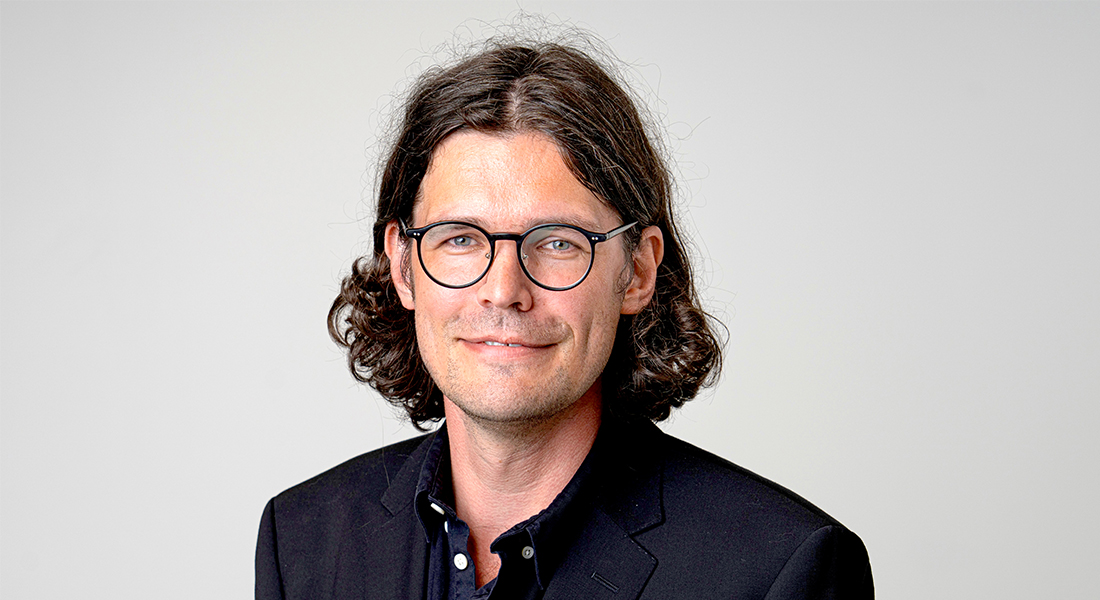
With this project, Jelle Bruineberg and his team seek to rethink the theoretical assumptions underpinning attention-deficit hyperactivity disorder (ADHD). ADHD is typically understood as a disorder of executive control, that is the ability to regulate and direct attention. But directly controlling one’s attention is difficult for everyone people with ADHD can often focus intensely for long periods when they are engaged by a task or topic that interests them.
To understand ADHD, we first need to understand attention
While ADHD diagnoses have increased significantly in recent years, ADHD is still poorly understood:
– ADHD is a tricky concept. Where do we draw the line between normal and pathological distractibility? To what extent is the rise in ADHD diagnoses a consequence of changed environments, changed brains, or changed expectations about what kinds of behavior are acceptable? I try to deal with these challenges by taking an indirect route: we first need to better understand attention before we can attempt to understand ADHD, says Jelle Bruineberg.
The project explores whether ADHD might be better understood not as a disorder of executive control but of salience – that is how certain aspects of the environment stand out and capture our attention. The project will first investigate what distinguishes effective attention from ineffective attention: more control over our attention is not always better, and being drawn away from one’s current task is not bad if attention is drawn to something more relevant.
This leads to a new understanding of the division of labor between control and salience. These updated conceptions will then be used to develop a new view of ADHD as a disorder of salience, and to investigate whether such a view is better able to account for some of the paradoxical aspects of ADHD.
Ultimately, he hopes that the project could lead to better diagnosis and treatment of ADHD as well as a different understanding of what it means to be diagnosed with ADHD.
A personal breakthrough
Jelle Bruineberg has been affiliated with the Center for Subjectivity Research since 2023. His research focuses on attention, cognition and the dynamic relationship between people and their environments. Drawing on philosophy, phenomenology and cognitive science, he investigates how attention is shaped by the world around us, how new technologies influence our ability to focus, and how embodied and enactive approaches can contribute to a better understanding of the mind. His work combines theoretical and empirical perspectives to explore how people engage with and make sense of their surroundings.
On a personal level, receiving the Sapere Aude feels like a major breakthrough:
– It is my first successful grant in Denmark. This provides me with a sense of belonging in the Danish research environment – more so than I had expected it would. It is also the first grant in which I get to build a small research group. For someone like me who likes to collaborate this is very exciting. I am really looking forward to working with the PhD student and postdoc, he says.
The four-year project Rethinking ADHD: from executive control to a disorder of salience (link in Danish) will begin on 1 January 2027 and will include a PhD student and a postdoctoral researcher. The project has an international and interdisciplinary advisory board with members from fields such as psychiatry, cognitive psychology, philosophy and anthropology.
While the primary work will be philosophical, a part of the project will involve a scoping review of qualitative research on ADHD, with a particular focus on how subjects describe distraction.
Contact
Assistant Professor Jelle Bruineberg
Email: bruineberg@hum.ku.dk
Phone: +45 35 33 78 89
Communications consultant Katrín Driscoll
Email: kommunikation-soendre@adm.ku.dk